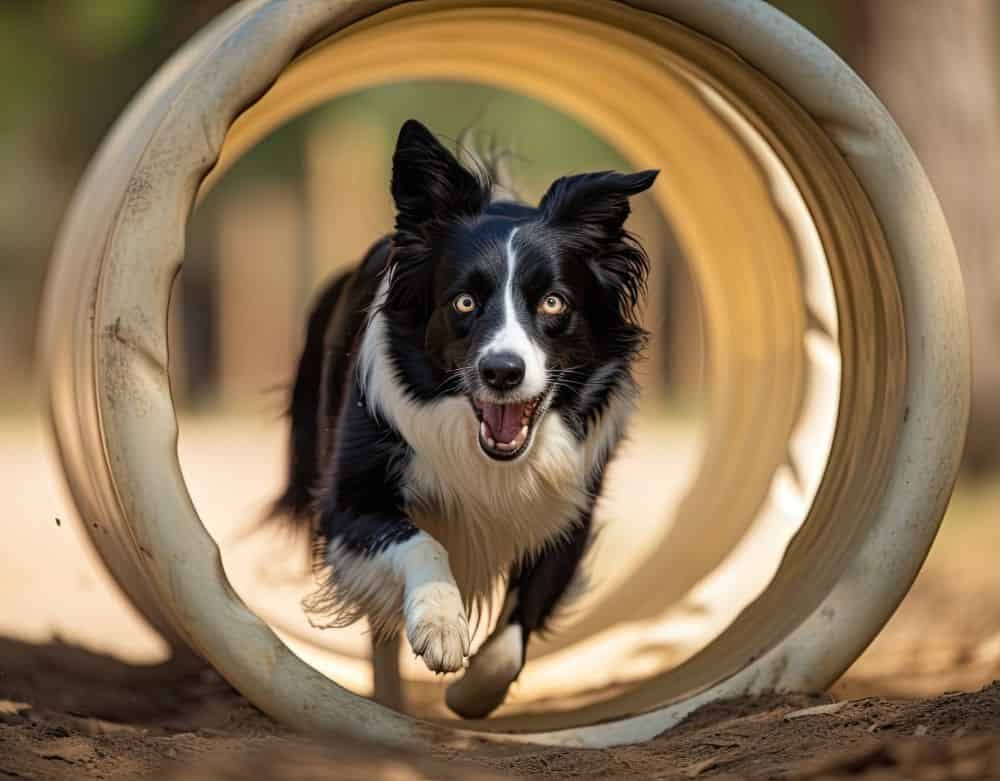
The traditional image of dog training often conjures up endless repetitions of "sit," "stay," and "come" – a necessary but sometimes tedious path to a well-behaved dog. But what if the journey to good manners could be as joyous and engaging as a romp in the park? It absolutely can, especially when you leverage the power of Training Games for a Well-Behaved Dog to Learn Obedience Through Play.
Turning training into a game transforms it from a chore into an exciting shared adventure for both you and your canine companion. It taps into your dog's natural instincts, boosts their motivation, and cements crucial behaviors in a way that sticks, even when distractions are high.
At a Glance: Play Your Way to a Polished Pooch
- Make Training Fun: Games elevate engagement and turn learning into an exciting experience.
- Build Essential Skills: Teach new commands, polish existing ones, and reinforce good habits.
- Boost Emotional Control: Help your dog manage excitement and ignore distractions.
- Strengthen Your Bond: Play-based training deepens trust and communication.
- Provide Mental & Physical Exercise: Keep your dog happy, healthy, and tired in the best way.
- Proof Behaviors: Ensure your dog responds reliably in various real-world situations.
Beyond the Basic Sit: Why Games Transform Training
We often think of training as direct instruction: you give a command, your dog performs, you reward. While effective, this approach can sometimes fall short in high-distraction environments or when your dog needs to make choices independently. This is where training games shine. They move beyond rote memorization, encouraging your dog to think, problem-solve, and develop self-control – vital ingredients for a truly well-behaved companion.
Think about it: when training feels like play, dogs are more eager to participate, absorb lessons faster, and generalize behaviors to new contexts. It’s not just about teaching a "stay"; it's about teaching your dog to choose to stay even when their favorite toy bounces past. This shift in perspective makes all the difference, fostering a dog who isn't just obedient but also confident, adaptable, and a joy to live with.
The Game Plan: Engaging Activities for Every Skill
Ready to swap drilling for thrilling? Here are some fantastic training games that build a solid foundation of obedience, self-control, and a deeper bond between you and your dog.
Loose Leash Water Walking: Mastering the Art of Stroll
A relaxed walk where your dog doesn’t pull is a universal dream for dog owners. This game cleverly puts the onus on you to guide your dog without relying on leash tension, teaching both of you better communication.
- Purpose: To achieve smooth, loose-leash walking, where the leash is for safety, not control.
- Requirements: An unbreakable drinking glass (filled with water), your dog’s leash.
- How to Play:
- Attach the leash to your dog and hold it comfortably in one hand, allowing for slack.
- In your other hand, hold a full glass of water.
- Begin walking, focusing on keeping the water from spilling. This forces you to be mindful of your body language and the subtle cues you give your dog.
- If your dog pulls, the water might slosh, reminding you to adjust your pace, direction, or use a verbal cue to encourage them back into position before the leash tightens.
- Reward your dog frequently for walking nicely by your side, especially when the leash is loose.
- Benefits: This game dramatically increases your awareness of your dog’s walking behavior and helps you synchronize your movements. You learn to control your dog's movement with body language and verbal cues, making the leash a safety net rather than a constant point of control. It’s a fantastic way to refine your communication and develop an intuitive, cooperative walking style.
Wild Sits: Building Emotional Self-Control in Chaos
Does your dog get overly excited when visitors arrive, when the doorbell rings, or at the park? "Wild Sits" is designed to teach emotional self-control by gradually introducing distractions and high energy into a simple sit command.
- Purpose: To teach your dog to settle into a sit position despite distractions and develop crucial emotional self-control.
- Requirements: Your dog on a leash (for control), high-value, delicious treats.
- How to Play:
- With your dog on a leash in a quiet area, get them excited. Jump around, clap your hands, make silly noises, or even run a short distance.
- After a few seconds of excitement, suddenly stop and ask your dog to "Sit."
- The instant their rear touches the ground, mark the behavior (with a "Yes!" or a clicker) and reward them with a treat.
- Immediately release them to play again for a few seconds.
- Repeat this sequence, gradually increasing the level of "wildness" before asking for the sit. Start with low-level movement (e.g., just a quick clap), building up to more vigorous jumping or running.
- Benefits: This game is invaluable for real-world situations like greeting guests calmly or maintaining focus in distracting environments. It helps curb undesirable behaviors often seen in hyper dogs, teaches them to ignore distractions, and provides an excellent burst of physical and mental exercise. It builds a dog's ability to "turn off" excitement and make a calm choice.
Roll the Dice: Keeping Training Fresh and Engaging
Repetitive training can lead to anticipation, where your dog performs a sequence of behaviors rather than truly listening to each cue. "Roll the Dice" injects unpredictability and novelty, forcing your dog to pay close attention to your specific instructions.
- Purpose: To keep training routines fresh, improve your dog’s focus on verbal and body language cues, and aid in smoothly transitioning between different positions.
- Requirements: One or two standard dice.
- How to Play:
- Assign a different behavior to each number on the die (or dice). For example:
- 1 = Sit
- 2 = Down
- 3 = Stand
- 4 = Stay (for 5 seconds)
- 5 = Paw (shake)
- 6 = Spin
- Roll the die. Whatever number comes up, cue your dog to perform the corresponding behavior.
- When your dog performs the behavior correctly, reward them with a treat and praise.
- Roll again and repeat.
- Benefits: This game prevents anticipation, forcing your dog to truly focus on your verbal or body language cues, effectively "proofing" their behaviors. It's excellent for helping dogs transition between different positions (e.g., going from a sit to a down, then to a stand) and keeps their mind sharp, preventing boredom in your training sessions.
Get in the Box: Building Confidence and Body Awareness
This seemingly simple game is a powerful tool for introducing shaping, encouraging independent thinking, and improving your dog’s body awareness – skills that translate into many other training aspects and even dog sports.
- Purpose: To introduce the concept of shaping, encourage independent problem-solving, and improve your dog’s awareness of their own body.
- Requirements: A low-sided, open cardboard box (start with one large enough for your dog to comfortably stand in), high-value rewards (treats), and an optional clicker.
- How to Play:
- Place the box on the floor. The ultimate goal is for your dog to stand completely inside the box with all four paws.
- Start by rewarding any interest your dog shows in the box: looking at it, sniffing it, touching it with a paw.
- Once they are reliably interacting, only reward when they put one paw in, then two, then three, gradually working up to all four paws.
- Place rewards inside the box to encourage them to step in further.
- A clicker can be incredibly useful here, as it communicates the exact moment your dog performs the desired action correctly.
- Once your dog masters standing in the box, try smaller boxes or different shaped containers to challenge their body awareness further.
- Benefits: This game is a fantastic introduction to shaping – a training technique where you build a complex behavior by rewarding small, successive approximations. It encourages dogs to think for themselves, boosting their confidence and problem-solving skills. Improved body awareness is valuable for everyday coordination and crucial for dog sports like agility, where precise movements are key. To explore more about playful interactions that strengthen your bond, you might Explore Playtime with Percy.
Group Hide-and-Seek: Reinforcing Reliable Recall
A reliable "come" or recall is perhaps the most critical command for your dog’s safety and your peace of mind. Group Hide-and-Seek makes recall a thrilling game, teaching your dog that coming to you is always the most rewarding option, even when you're out of sight.
- Purpose: To teach dogs that coming when called leads to positive outcomes and encourage them to respond reliably even when the caller is out of sight, which is essential in emergencies.
- Requirements: Multiple people (or at least your dog and one other person), high-value treats or favorite toys.
- How to Play:
- Decide on the order in which each person will call the dog.
- If your dog doesn’t have a rock-solid "stay," one person should gently hold the dog while the others go hide in different (but initially easy) places around the house or yard.
- Once everyone is hidden, the first person calls the dog’s name enthusiastically and says "Come!"
- When the dog finds that person, the person makes a huge fuss, showering the dog with praise, playtime, and a jackpot of treats or a favorite toy.
- After a brief celebration, the dog is released, and the next person calls.
- Continue until the dog has found everyone. Start with easy hiding places and gradually build to more challenging ones as your dog gets better at the game.
- Benefits: This game powerfully reinforces the idea that coming when called is incredibly rewarding. It teaches dogs to respond even when the caller is out of sight, building confidence and reliability in their recall – a skill that could literally save their life in an emergency. It transforms recall from a command into an exciting treasure hunt!
Treat Countdown: Rewarding the Everyday Good
Many owners inadvertently focus their attention only when their dog is doing something "wrong" or when they're giving a command. The "Treat Countdown" game flips this dynamic, encouraging you to actively notice and reward your dog's good behavior throughout the day, reinforcing proper manners without explicit commands.
- Purpose: To reinforce good, spontaneous behavior and teach owners to pay consistent attention to and reward the positive choices their dog makes.
- Requirements: Approximately 25 small, high-value treats (or a handful of kibble if your dog finds it rewarding).
- How to Play:
- At the start of your day or a specific block of time (e.g., an hour in the evening), count out your 25 treats and keep them easily accessible in a pocket or treat pouch.
- Throughout this period, actively observe your dog. Every time you notice them doing something you like on their own accord – lying calmly on their bed, sitting politely by your feet, walking past a distraction without reacting, settling quietly while you work, or playing gently with a toy – quietly go over, praise them softly, and give them a treat.
- You're not asking for a specific behavior; you're simply rewarding the desired behaviors your dog offers naturally.
- Your goal is to "spend" all 25 treats by the end of your designated time. This forces you to be constantly on the lookout for good behavior.
- Benefits: This game is incredibly effective for reinforcing good manners without explicit commands. It teaches your dog that "being good" pays off continuously. Crucially, it trains you, the owner, to always pay attention to and appreciate good behavior. Remember, rewarded behavior is repeated behavior – and this game ensures you’re rewarding the right things often.
Mastering the Game: Best Practices for Play-Based Learning
To truly harness the power of training games, keep these principles in mind:
- Start Simple, Build Gradually: Don't expect perfection immediately. Begin with easy versions of each game in a low-distraction environment. As your dog shows understanding, slowly add more complexity, duration, distance, and distractions.
- Keep it Positive and Fun: The entire point of game-based training is enjoyment. If you or your dog are getting frustrated, take a break. End every session on a high note. Your enthusiasm is contagious!
- Short, Frequent Sessions: Dogs, especially puppies and young dogs, have short attention spans. Five to ten-minute training games multiple times a day are far more effective than one long, tedious session.
- Consistency is Key: Everyone in the household should be on the same page regarding cues, rewards, and game rules. Consistency helps your dog understand what's expected of them.
- Read Your Dog: Pay attention to your dog's body language. Are they engaged and eager? Or are they showing signs of stress, confusion, or boredom? Adjust the game to their current energy level and understanding.
- High-Value Rewards: What motivates your dog? For some, it's a specific treat; for others, it's a favorite toy, a quick game of tug, or enthusiastic praise. Use what truly excites them.
- Troubleshooting:
- If your dog isn't getting it: Break the behavior down into smaller steps. Make it easier. Go back a step. Don't push too hard.
- If distractions are too much: Go back to a quieter environment. Gradually reintroduce distractions one at a time.
- If your dog anticipates: "Roll the Dice" is perfect for this, but also try varying your reward timing and location, and only reward when they truly perform the requested behavior.
Beyond the Backyard: Real-World Impact of Play Training
The skills your dog learns through these games aren't confined to your training sessions. They directly translate into a more enjoyable and harmonious daily life:
- Public Outings: A dog who can manage their excitement (Wild Sits) and walk politely on a leash (Loose Leash Water Walking) becomes a joy to take to parks, cafes, or on walks around the neighborhood.
- Visitor Management: A dog who can settle despite the doorbell or new people (Wild Sits) makes having guests over a stress-free experience for everyone.
- Safety and Freedom: A rock-solid recall (Group Hide-and-Seek) means you can trust your dog more in off-leash areas, knowing they'll come back when called, potentially preventing dangerous situations.
- Confident Companionship: Dogs who think for themselves (Get in the Box) and understand what's expected of them are generally more confident, adaptable, and less prone to anxiety.
- Everyday Manners: A dog who is constantly rewarded for good, unsolicited behaviors (Treat Countdown) naturally develops better manners around the house, without you having to constantly give commands.
Your Next Move: Making Training a Daily Adventure
Forget the drill sergeant routine. Embrace the play. Training games are your secret weapon for building a well-behaved dog who not only understands what you want but wants to do it. They transform mundane lessons into exciting challenges, strengthening your bond and enriching your dog's life in countless ways.
So, grab some treats, pick a game, and start playing! You'll soon discover that the most effective way to teach your dog is often the most fun way for both of you. The journey to a well-behaved dog isn't just about obedience; it's about partnership, trust, and shared joy, one game at a time.